Nivritee Research · Family & behaviour

Families, couples and money

Talking about money, planning together, supporting parents, and making sure the people who matter know where everything is. 9 articles, every figure sourced.

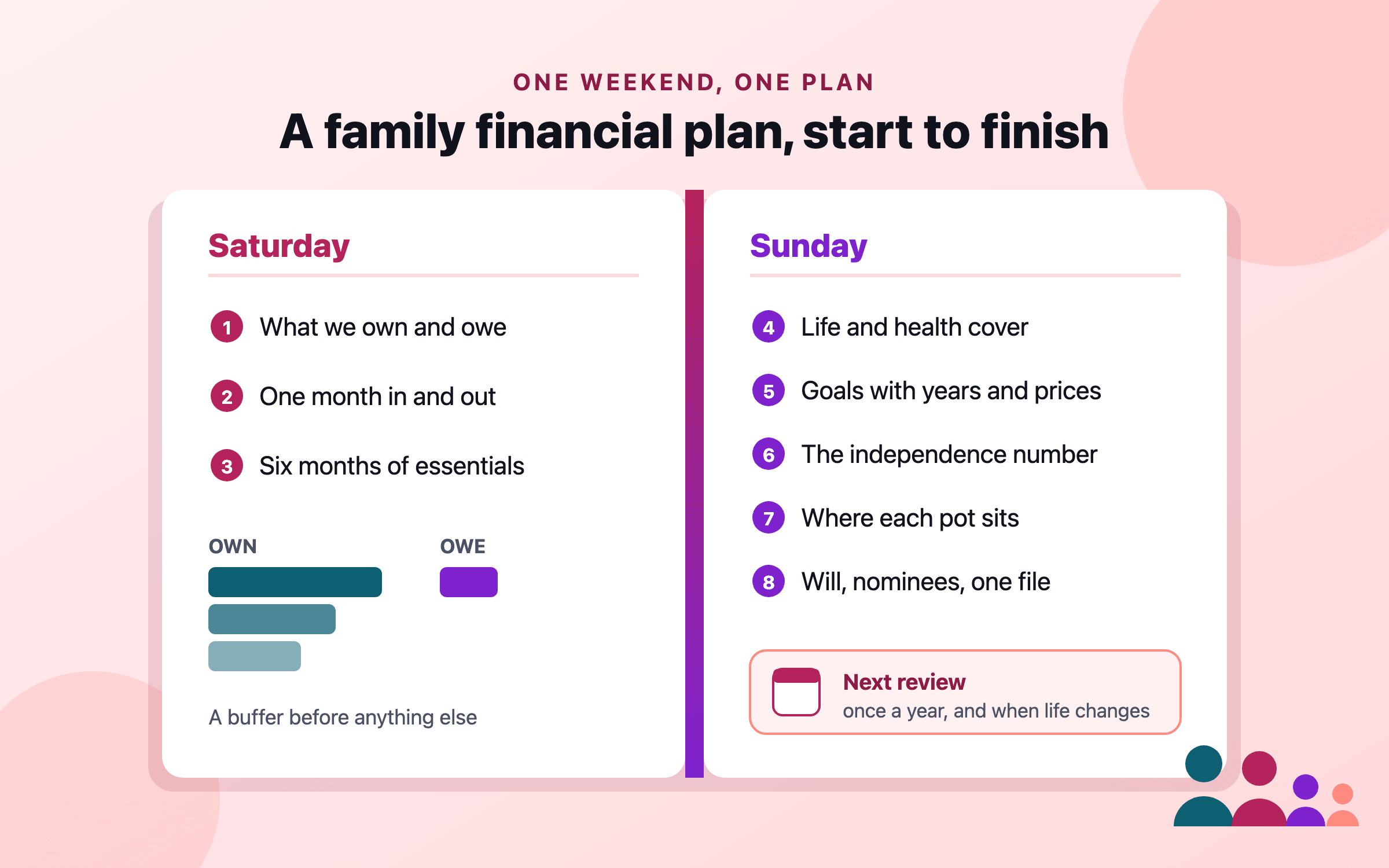
A family financial plan, start to finish

Sana and Arif, two earners with two children in Hyderabad, list what they own and owe, find a monthly surplus of ₹50,000, fill a six-month buffer, size term and health cover, price two degrees and a home in the years they fall due, and work out an independence number. The honest result is that the surplus covers the near goals and about a third of the far one, which tells them exactly which lever to pull.
Family & behaviour

Every article on this topic

Wills, nominees and the family file

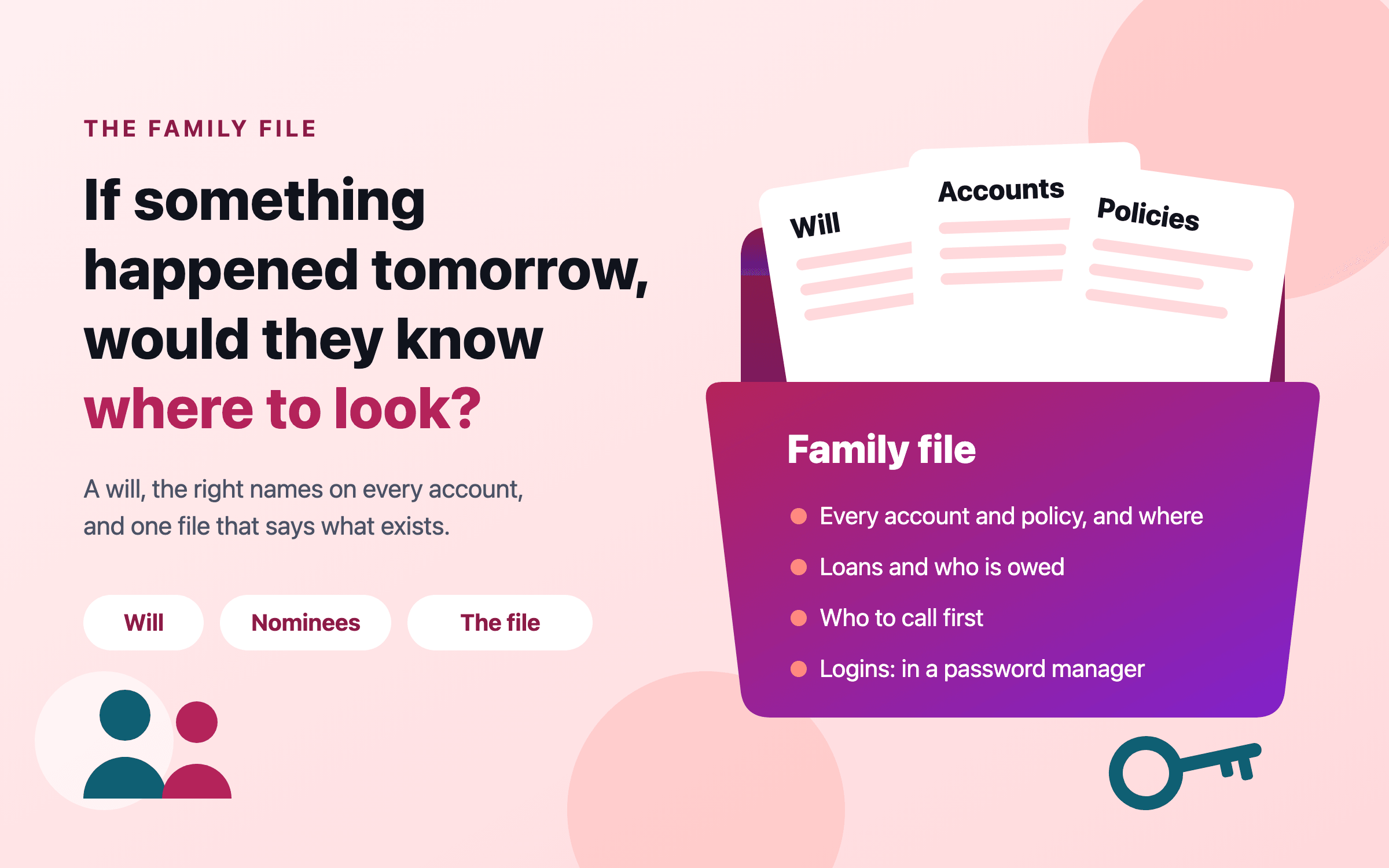
In the US, the UK, Canada, Singapore and Australia, roughly half of adults have no will. Money then moves by three routes: joint ownership, a name on the account, or a will — and where there is no will, a fixed legal order that may not match your wishes. Families with assets in more than one country need a plan for each, and everyone needs a family file that says what exists and where.

What your partner needs to know about money

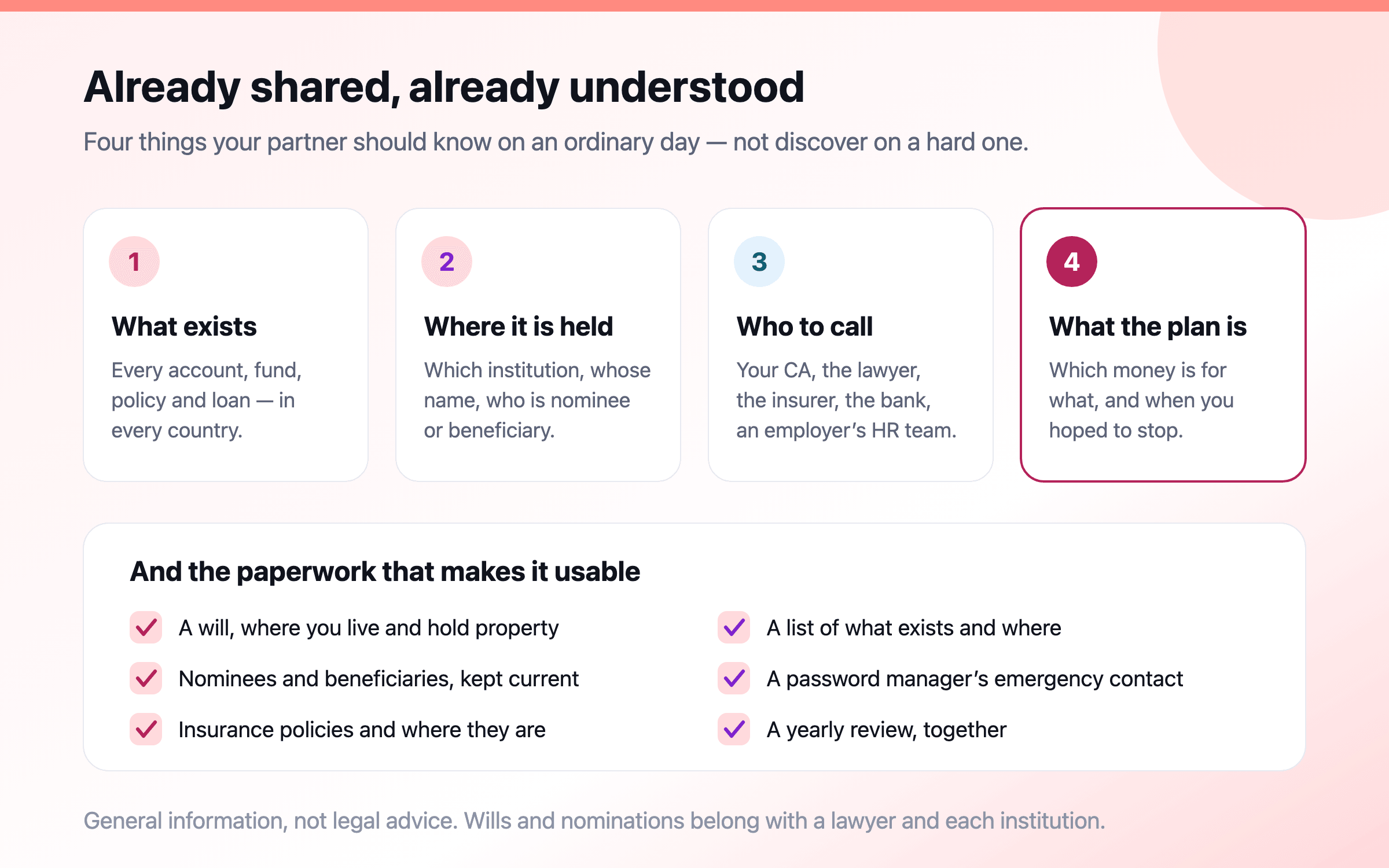
In most households one person knows where everything is. Readiness means your partner knows four things too — what you own and owe, where each is held, who to call, and what the plan is — plus the paperwork that makes it usable: a will, up-to-date nominations or beneficiaries, insurance details and a way into the accounts. The easiest time to share all of it is now, when nothing is wrong.

Talking to ageing parents about money

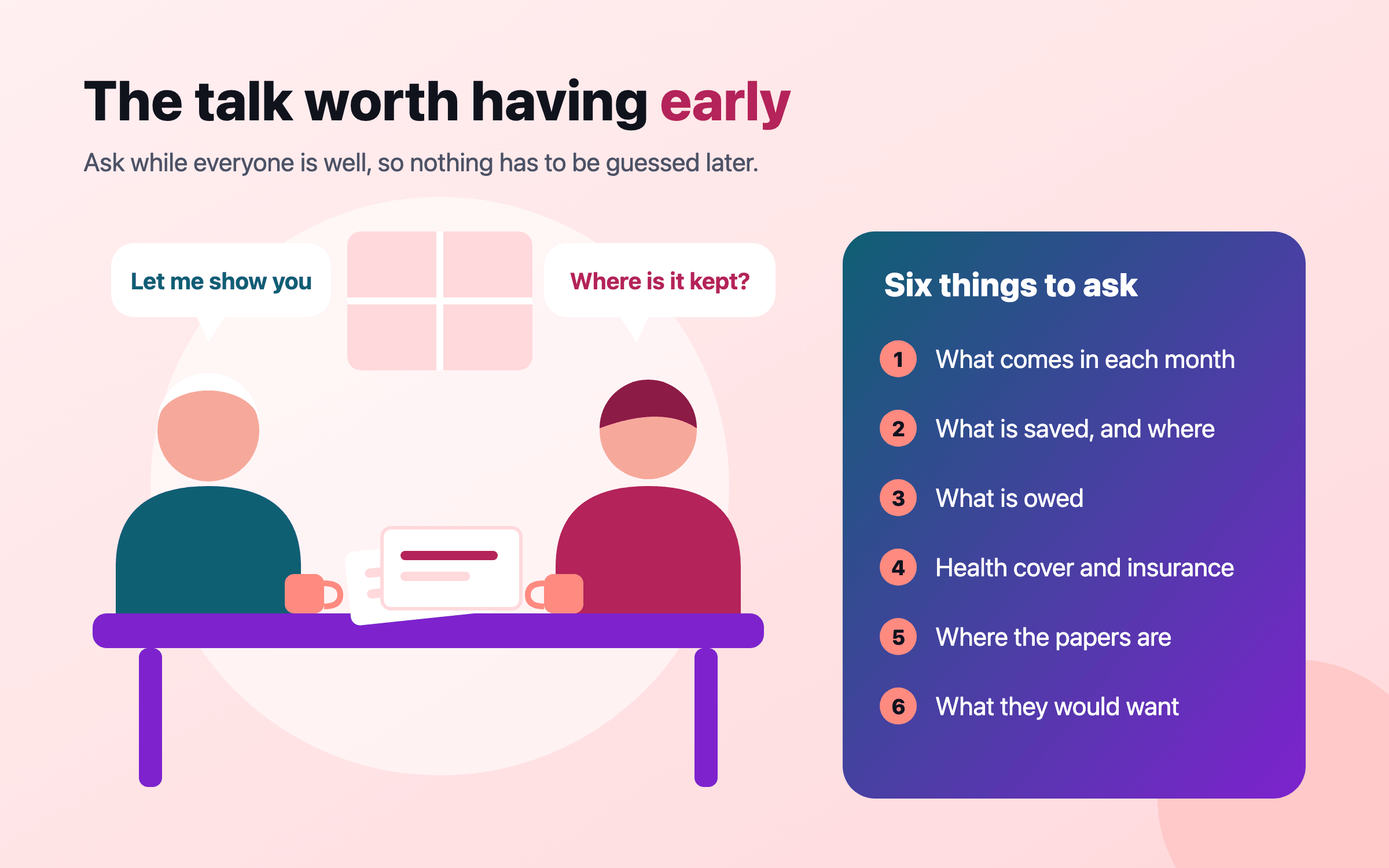
Most families have this conversation too late, in a hospital corridor. Asked early, it comes down to six things — what comes in, what is saved, what is owed, what cover exists, where the papers are and what your parents would want — plus a power of attorney signed while they are well, a watch for scams, and an agreed split of support between siblings that also fits inside your own plan.

How couples can talk about money

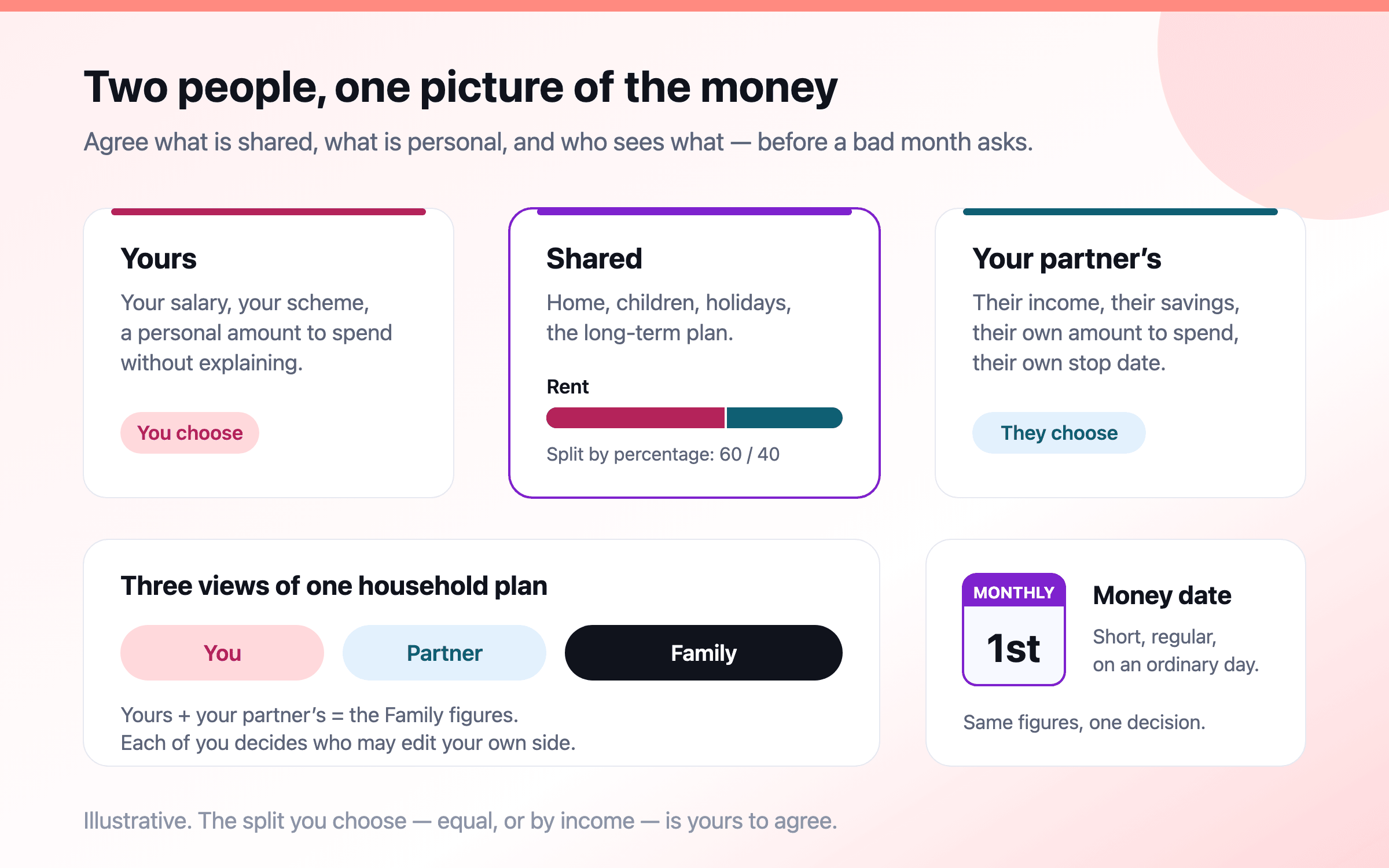
Money disagreements are common and, in long-run data, more strongly linked to divorce than any other kind. What helps is not agreeing on everything but seeing the same picture: a structure for joint and personal money, a regular money date, an agreed answer to who sees what, and one plan that holds two careers which may stop at different times.

Joint or separate finances? Yours, mine and ours

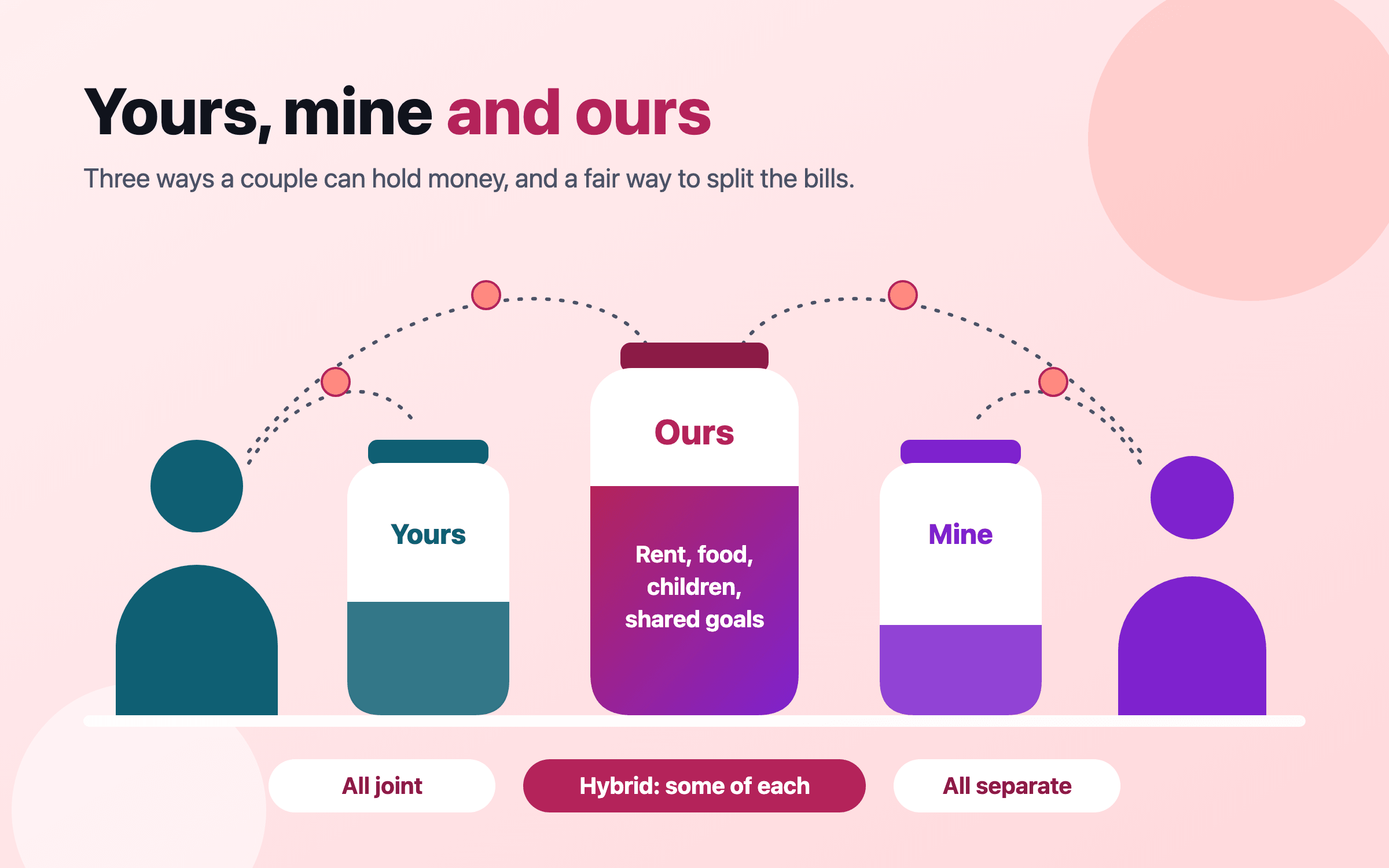
There are three ways to hold money as a couple: all joint, all separate, or a joint pot for shared costs with personal money beside it. Experiments and large surveys link more pooling with happier, longer relationships, especially when money is tight. When incomes differ, splitting shared costs in proportion to income — or so both keep the same amount — is usually fairer than halves.

The sandwich generation: parents, kids and money

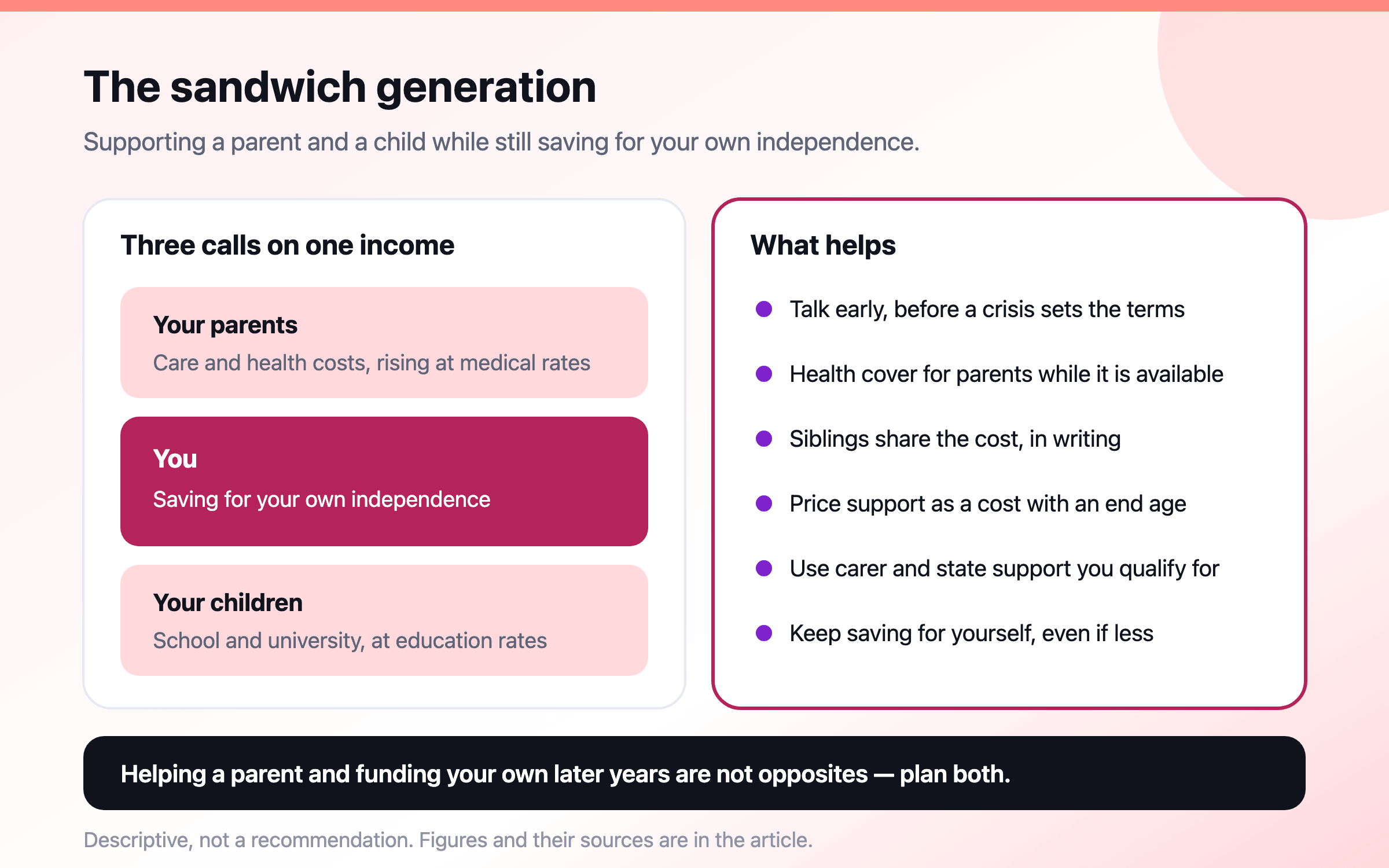
Being “sandwiched” between an ageing parent and your own children is common: 54% of Americans in their 40s are, and most older Indians live with their children. The costs that come with it — care and health — rise faster than prices in general. Families who name the cost, share it, insure early and keep saving something for themselves come through it best.

Behavioural biases that cost investors money

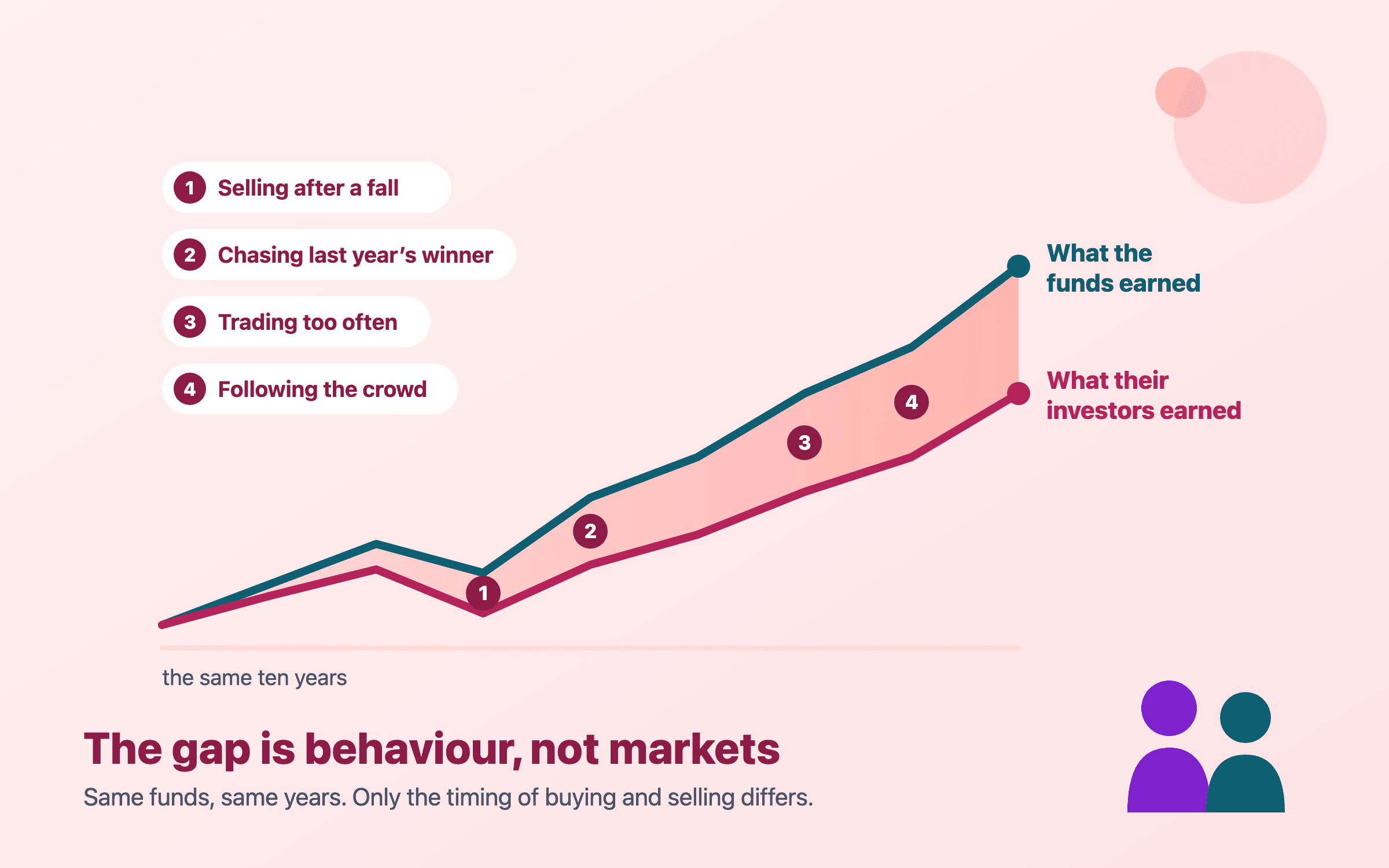
Investors in US funds earned 8.7% a year over the ten years to 2025 while the funds themselves returned 9.9%. The gap comes from when people buy and sell, driven by a handful of well-studied biases. Each has a simple counter-measure, and couples can turn those into shared rules that make the costly decision harder to take alone.

Lifestyle inflation and knowing when it is enough

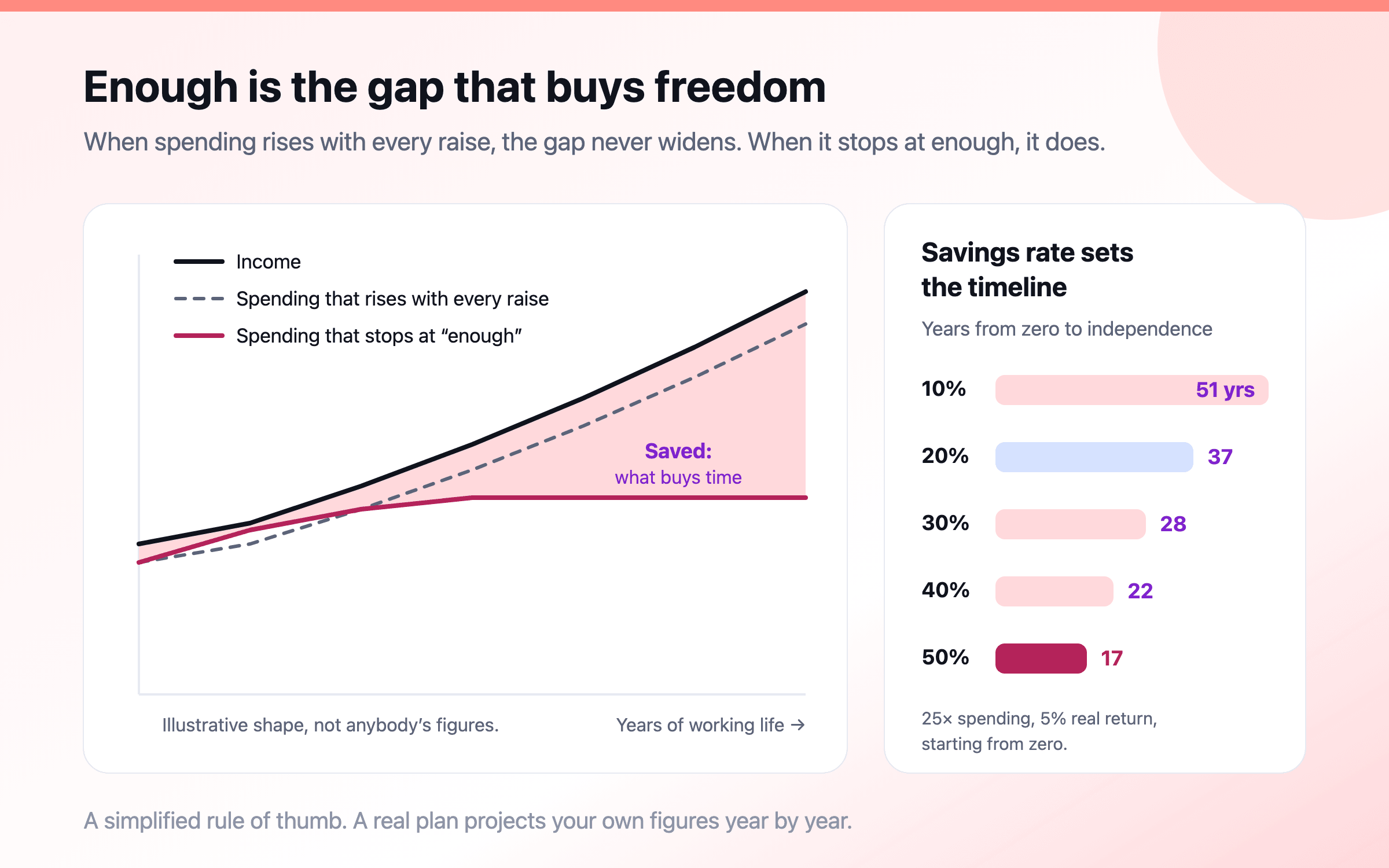
Lifestyle inflation is spending that rises to meet each raise, and psychology explains why it feels natural: people adapt to what they have. Income does keep helping most people, but a plan that lets spending rise in lockstep never gets closer to independence. The arithmetic says savings rate, more than income, decides how many years it takes — so the strongest guardrail is to decide what enough looks like and route part of every raise to savings before it can be spent.

Free, neutral and private

Family-office thinking, free for every family.

Nothing here is for sale, so nothing here pushes you anywhere. You read the figures, and you decide.

  • We don’t sell financial products.No commissions, no funds of our own, no referral fees.
  • We don’t sell data. We don’t run ads.No amount from your plan goes into an email or an analytics tool.
  • Nobody at Nivritee can open your plan.There is no screen that could show it to us.

Now run the numbers on your own money.

Nivritee projects your family’s plan in the country you will live in, tracks every investment in one currency, and shows where each pound, dollar or rupee should sit. Free, and nobody here reads your plan.