If your job feels shaky, the months before a layoff are the cheapest time to prepare: measure your runway in months, decide what you would cut and in what order, and check what you are owed while you still have a desk.
US employers announced 43,281 job cuts in September 2026 and technology led every sector, while India’s big IT firms moved in opposite directions. If your job is the one people are whispering about, the useful work is done before any notice arrives: count your runway in months, plan your cuts in order, check your contract and cover, and talk it through at home.
Nivritee Research · 24 October 2026 · 11 min read
The short answer: if your job feels shaky, do not wait for the meeting invitation. Work out how many months your cash would last on the spending you have now and on essentials only, decide in advance what you would cut and in what order, and use the weeks you still have a salary to check your notice terms, buy health cover you control and build the buffer. The news this autumn says layoffs are concentrated, not universal: US employers announced 43,281 cuts in September, the fewest for a September since 2022, but technology announced more than any other sector1,2.
Shreya and Varun live in Bengaluru with their seven-year-old. Varun has spent nine years at an IT services company, and since August his project has been winding down; two people on his floor have been “released” and nobody says where the next billing will come from. Shreya works at a mid-sized firm that is not in the news. Nothing has happened to Varun yet. That is exactly why this is the right month for them to sit down with the numbers, and it is the month this article follows. If the notice has already come, the article you want is what to do after a job loss; this one is for the waiting.
What the autumn’s news actually says
Start with the United States, because it publishes the most. Challenger, Gray & Christmas counted 43,281 announced cuts in September 2026, about 20% fewer than a year earlier, and 573,195 for the first nine months, almost 40% below the same months of 20251,2. That is not a wave in aggregate. Underneath it, technology announced 10,799 cuts in September, 77% more than in August, and accounts for 29% of everything announced this year; artificial intelligence was named in 120,136 announcements this year, about 21% of the total, the most-cited reason2. Hiring is the other half of the story: employers planned 90,787 hires in September, the weakest for that month since 20111.
The official US jobs report for September showed the same low-hire, low-fire pattern. Payrolls rose by just 29,000 and unemployment was 4.2%, little changed, with 7.1 million people out of work; the median spell had lasted 11.5 weeks, the average 24.8 weeks, and 27.1% of the unemployed had been looking for 27 weeks or more4. Read those two durations together: most searches end within three months, but the average is pulled up by a long tail, and a household planning on the median alone is planning for the lucky half. layoffs.fyi, which counts announced tech layoffs worldwide, had already logged 126,305 by mid-August, more than the 122,606 it counted for the whole of 20255.
Banks joined in during October. Barclays said on 22 October that it expects about 5,000 job reductions, around 5% of its staff, with about 60% of them in support functions including software developers; its chief executive called AI “the icing on the cake, not the cake”6. In the UK more broadly, unemployment was 4.7% in June to August and vacancies fell to an estimated 691,000 in July to September, 5.1% fewer than a year earlier7.
India’s picture is mixed, and Varun’s worry is about the mix. In the July to September quarter TCS added 4,258 people net, its third quarter of additions after a restructuring in the previous year, and ended at 598,0568. Infosys added 4,480, to 332,542, while cutting its revenue growth outlook for the year to 1–2% in constant currency9,10. Wipro’s headcount fell by 6,716, to 236,328, even as its voluntary attrition eased to 13.8%3. Lower attrition matters to people like Varun: when fewer colleagues leave of their own accord, a company that wants a smaller bench has to ask people to go. Across all of urban India, unemployment was 6.9% in September11.
Net change in headcount at three Indian IT services firms, July to September 2026 quarter.
A net figure: hires minus everybody who left, by choice or not. A firm can add people overall while particular roles, projects or levels shrink, so a positive number says little about any one floor. 8,9,3The figures in this chart
Net change in employees
TCS
4,258
Infosys
4,480
Wipro
−6,716
Elsewhere, the signal is not all bad. ManpowerGroup’s survey of employers for the last quarter of 2026 put India’s net hiring outlook at +54%, the strongest of the markets it covers, and the UAE’s at +41%, up 24 points on the previous quarter12. Thailand’s strain is in factories: reports in September said 18,998 workers were affected by temporary suspensions in June, 58% more than in May, with car parts, garments, rubber and plastics named13. For a household, the point of all this is not to predict the economy. It is to know whether your own job sits in the part that is shrinking.
Unemployment rate in the latest official release before 24 October 2026.
Each country measures unemployment its own way (India’s figure is from the monthly PLFS for persons aged 15 and above in towns and cities), so read each bar against its own history rather than against the others. 4,7,11The figures in this chart
Unemployment rate, %
US, September
4.2%
UK, June to August
4.7%
India urban, September
6.9%
Who is most exposed
The reports point to a few recognisable positions. Roles whose work an automation project is explicitly aimed at, such as support functions, testing, routine coding and operations, appear again and again in the announcements; Barclays named support roles and developers specifically6. People on a project or account that is ending, with no next assignment named, sit on the bench, and the bench is where restructuring starts. Long tenure at a mid-level grade can cut both ways: it carries knowledge, and it also carries a salary that a cost programme looks at first. In manufacturing, orders and input costs decide, which is what Thailand’s suspensions describe13.
Two quieter signs are worth taking seriously: a hiring freeze in your team, and being asked to document what you do. Neither means you are next. Both mean the decision is being made somewhere you cannot see, and that preparing costs you little if you turn out to be wrong. A household where one adult works in an exposed role and the other does not is in a far stronger position than one where both are exposed or there is only one income, and the runway arithmetic below shows by how much.
The runway: how many months your cash lasts
Runway is a simple division with two choices inside it. The cash is only what you can reach this week without selling anything at a bad moment: savings accounts and fixed deposits you can break. The monthly gap is what you would spend minus whatever income would carry on. Do it twice, once on the spending you have now and once on essentials only, and do it for the case that worries you and for the case that would be worse. Shreya and Varun’s month looks like this.
An illustrative household with round figures. Varun’s EPF and the equity funds are left out of the cash on purpose.
Shreya and Varun’s month
Amount
Varun’s take-home pay
₹1,40,000
Shreya’s take-home pay
₹60,000
Home-loan EMI
₹45,000
Groceries and household
₹20,000
School fees (yearly fee spread over the months)
₹10,000
Help for Varun’s parents
₹10,000
Transport
₹7,000
Electricity, water, phone, internet
₹6,000
Insurance premiums
₹2,000
Essential spending
₹1,00,000
Food delivery and eating out
₹12,000
Shopping and clothes
₹10,000
Travel (yearly trips spread over the months)
₹10,000
House help
₹8,000
Subscriptions
₹3,000
Flexible spending
₹43,000
All spending
₹1,43,000
Monthly SIPs into equity funds
₹40,000
Left in the savings account
₹17,000
Cash today: savings account and fixed deposits
₹6,00,000
The SIPs are assumed paused in every case: a household with no salary is not investing new money.
If…
Monthly gap
Months of runway on today’s cash
Varun’s pay stops, spending as now
₹1,43,000 − ₹60,000 = ₹83,000
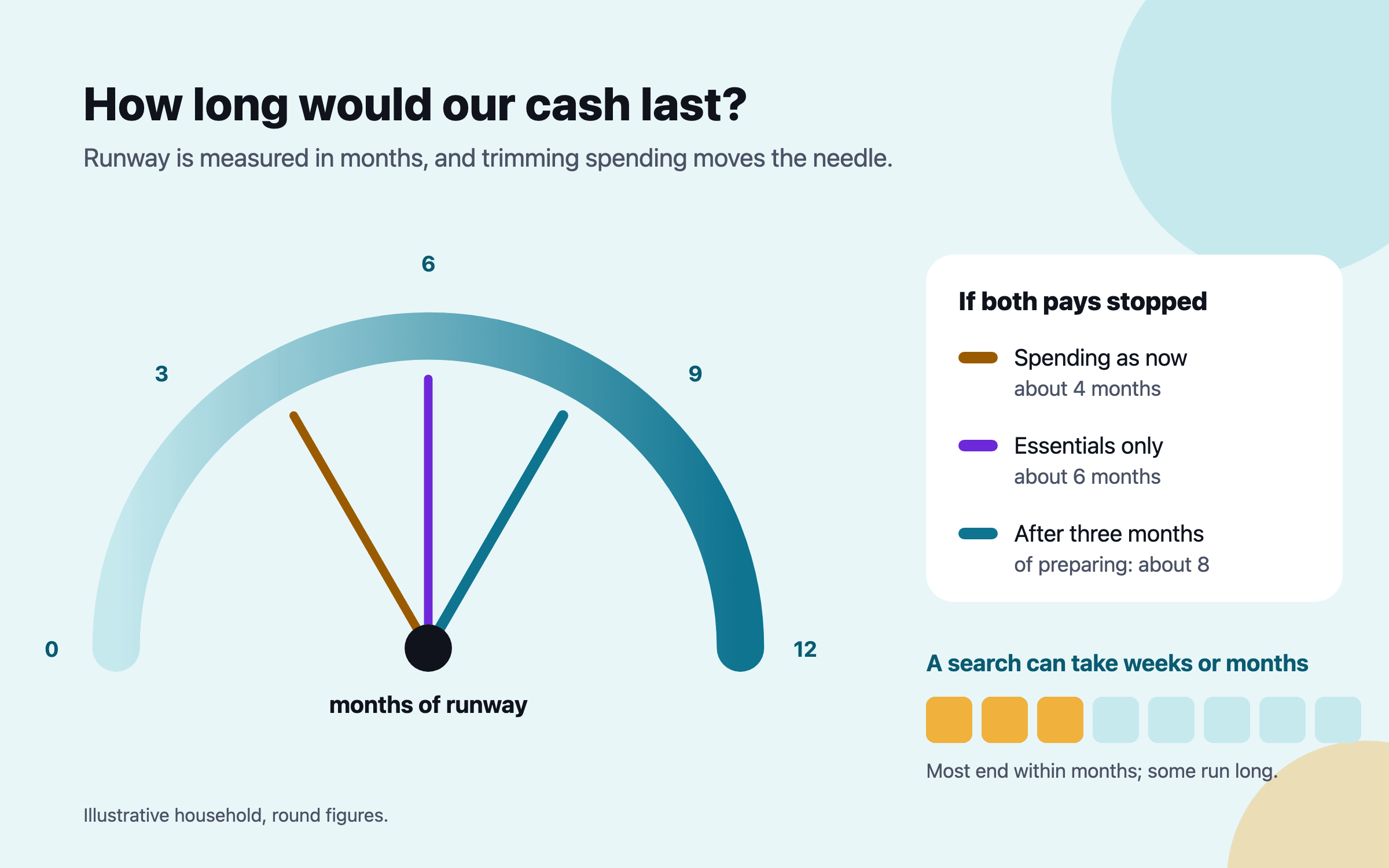
₹6,00,000 ÷ ₹83,000 = 7.2
Varun’s pay stops, essentials only
₹1,00,000 − ₹60,000 = ₹40,000
₹6,00,000 ÷ ₹40,000 = 15.0
Both pays stop, spending as now
₹1,43,000
₹6,00,000 ÷ ₹1,43,000 = 4.2
Both pays stop, essentials only
₹1,00,000
₹6,00,000 ÷ ₹1,00,000 = 6.0
The case Varun fears gives them a little over seven months at today’s spending and fifteen on essentials, because Shreya’s pay keeps coming. Seven months is longer than the US average spell of 24.8 weeks, a little under six months, and well past the median of 11.5 weeks4. The worse case, both pays stopping, gives them about four months at today’s spending and six on essentials. That second number is the one to protect, because it is the one that turns a hard year into a crisis. It also matches the usual advice of three to six months of essential spending, which is discussed in detail in how big an emergency fund should be.
Two things are left out of the cash on purpose. The equity funds might be down on the day they are needed; selling them in a falling market turns a temporary loss into a permanent one, which is the argument of recessions, jobs and markets. And Varun’s EPF is a last resort: on unemployment, EPFO’s rules let a member withdraw 75% of the PF balance immediately and the rest after a year, but every rupee taken out stops compounding for the long term14,15. In the US, the equivalent trap is a 401(k) loan taken now to steady the month: if you leave the job with the loan unpaid, the plan can offset it against your balance, which counts as a distribution unless you roll that amount over by your tax-return due date, including extensions16. While your job is shaky, it is the worst time to borrow from your own plan.
Three months of preparing
The months before a layoff are valuable because the salary is still arriving. Shreya and Varun make two changes for the next three months. They redirect the SIP money into their savings account instead of the equity funds, keeping the funds they already hold untouched, and they make the first round of cuts in the table below, the ones nobody in the house will much miss. Nothing about their long-term investing has been sold; the new money simply waits in cash until they know where Varun stands.
Illustrative. The cuts are the first tier of the cut order below.
Over three months
Each month
Three months
SIP money kept in cash
₹40,000
₹1,20,000
Already left over each month
₹17,000
₹51,000
First round of cuts
₹15,000
₹45,000
Added to the buffer
₹72,000
₹2,16,000
Cash after three months
₹6,00,000 + ₹2,16,000 = ₹8,16,000
Shreya and Varun’s runway in months, on today’s cash and after three months of preparing.
Cash today
After three months of preparing
Illustrative: the household’s own arithmetic, from the tables above. Three months of a still-arriving salary add roughly two months to the worst case. The figures in this chart
Cash today
After three months of preparing
Varun’s pay stops, spending as now
7.2 months
9.8 months
Varun’s pay stops, essentials only
15.0 months
20.4 months
Both pays stop, spending as now
4.2 months
5.7 months
Both pays stop, essentials only
6.0 months
8.2 months
What to cut, and in what order
A cut decided calmly in advance is far easier than one made in a panic at the end of a bad month, and it saves an argument when nerves are thin. The order that works for most households runs from reversible and painless to slow and painful: things you can switch back on the day you get an offer go first, commitments to other people go last, and the things that protect you from a second shock are never cut at all. Insurance premiums sit in that last group. A layoff followed by an uninsured hospital bill is how a household’s six months become six weeks.
Illustrative. Help for parents is a family decision, not a line item; it is protected here because Varun’s parents depend on it.
Travel ₹10,000 → ₹0; the rest of delivery, shopping and subscriptions → ₹0
₹1,08,000
If the search runs past three months
House help ₹8,000 → ₹0
₹1,00,000
Never, unless the plan is rebuilt
EMI, school, groceries, utilities, transport, insurance, help for parents
₹1,00,000
Two cautions. Do not prepay the home loan from the buffer now, however tempting a smaller EMI looks: money paid to the bank cannot be asked back when the salary stops, while cash can still pay the EMI for months. And do not take on a new EMI, a car or a phone on instalments, until the uncertainty has passed. If the layoff does come, the conversation with the bank, before any payment is missed, is covered in what to do after a job loss.
What to check while you still have a desk
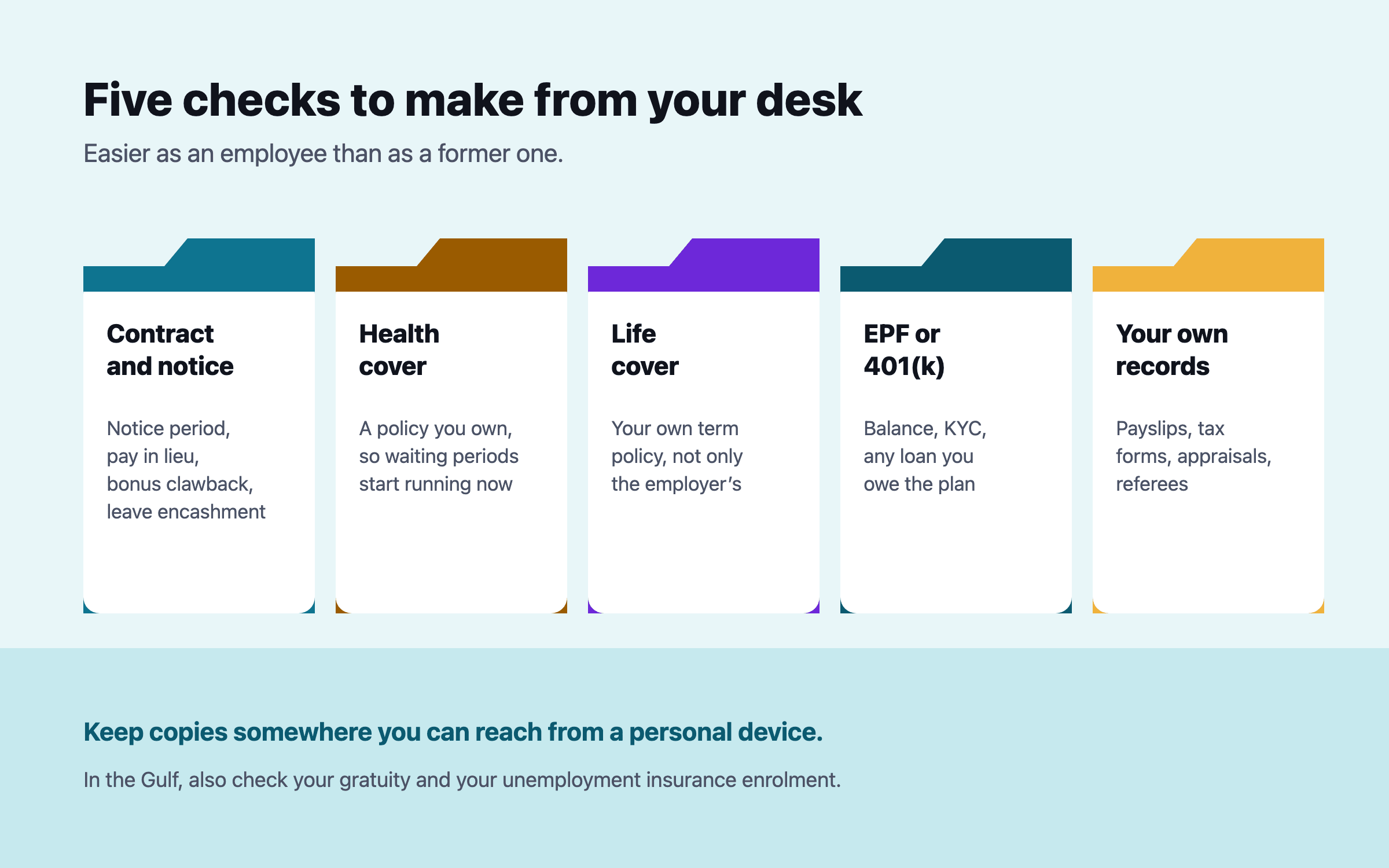
Some answers are much easier to get while you are an employee with access to the HR portal than as a former one. Shreya and Varun go through this list together over one weekend.
Your appointment letter and policy. Find the notice period, whether the company may pay it in lieu, any clause about repaying a joining bonus or relocation, leave encashment, and any non-compete. Save copies outside the company’s systems.
Health cover you control. A group health policy ends with the job. Buy an individual or family floater now, while employed and healthy, so that its waiting periods start running; ask your insurer whether the group policy can be migrated to an individual one, and keep the group policy details handy.
Term life cover. If the only life cover is the employer’s, buy your own while your health and income make it simple.
EPF in India. Log in, check the balance and that your bank account and KYC are linked, so a claim is quick if you ever need one. Under EPFO’s current rules, 75% of the PF balance can be withdrawn immediately on unemployment14.
401(k) in the US. Note any loan outstanding and its balance; an unpaid loan can be offset against the account when you leave16.
In the Gulf. Your residence visa is tied to your job. Check your end-of-service gratuity calculation and that you are enrolled in the UAE’s unemployment insurance scheme if you work there; the after-the-loss article sets out the rules.
Your own records. Payslips, Form 16 or W-2, appraisal letters and the contact details of people who know your work, kept somewhere you can reach on a personal device.
The checks that are easiest to do while you are still an employee. None of them costs much, and each one closes a gap that is expensive to discover later.
Upskilling and a job-search fund
The best protection against a layoff is a shorter search, and the cheapest time to shorten it is before it starts. Varun sets aside a small, separate job-search fund for a certification in the cloud platform his clients are moving to, a few months of a professional networking subscription and the travel to interviews, and treats it as part of the buffer’s purpose rather than a raid on it. He also updates his CV and his profile now, quietly, and has coffee with two former colleagues who moved to product companies. None of this is disloyal: it is what a team lead does when a project is ending.
Pick skills from the work you can see being bought, not from lists of hot topics. Infosys reported its AI-related revenue growing even as its overall outlook was cut, and ManpowerGroup found the information sector had the strongest hiring outlook in its Asia Pacific and Middle East survey at +42%9,12. The useful question for Varun is narrower: which skill would make him the obvious person for the next project his own company is bidding for, or for the job two floors up at a client?
The conversation at home
Shreya and Varun’s hardest step is not arithmetic. Varun had been carrying the worry alone for six weeks and checking the company chat at two in the morning; Shreya had noticed and assumed it was something worse. Saying it aloud, with the tables open, turned a vague dread into three numbers: seven months if it happens, six months if the worst happens, and about two more months for every quarter they keep preparing. A couple who has agreed in advance what they will cut, and when, has removed most of the arguments that a layoff otherwise brings. Talking about money as a couple has more on having that conversation without blame.
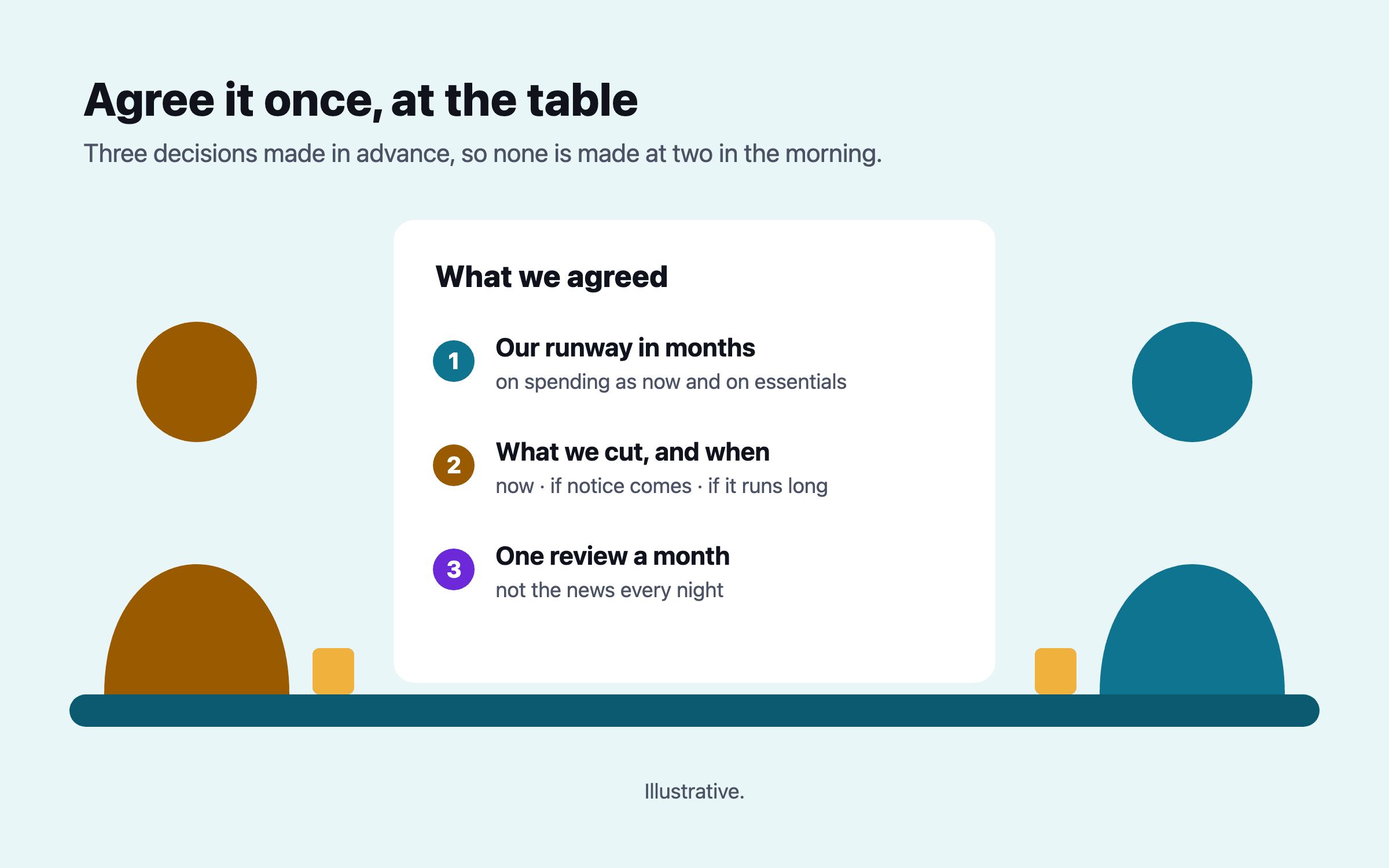
Agree three things: who tells the child and the parents what, if anything; a date to look at the numbers again, monthly rather than daily; and a trigger for each tier of cuts, so that nobody has to decide in the moment. Shreya’s income is the household’s biggest protection, which is worth saying out loud too, because it changes what feels fair about who cuts what.
Agreeing the triggers in advance means nobody has to decide anything at two in the morning.
Living with the waiting
Uncertainty is often harder to bear than bad news, because there is nothing to act on. The preparation is the antidote: once the runway is counted, the cuts are ordered and the checks are done, the question “what would we do?” has an answer, and the worry has less to feed on. Limit the checking. A monthly review of the numbers is enough; the company chat, the layoff trackers and the stock price add noise without changing a single figure on your sheet. Keep doing your work well, too: in a restructuring, the people seen as useful to the next project are the ones kept for it.
If the layoff never comes, Shreya and Varun have lost nothing. Their SIPs restart with a larger buffer behind them, the health and life cover they bought are cover they wanted anyway, and Varun has a certification and a current CV. If it does come, they start the search with eight months of essentials in the bank, a plan everyone in the house has agreed, and the first 90 days already mapped. Either way, this week’s work is the same: count the months, order the cuts, and make the calls you can only make from your desk.
How Nivritee helps
Questions people ask
What should I do if I think I am going to be laid off?
Work out how many months your cash would last on current spending and on essentials only, decide in advance what you would cut and in what order, and use the time you still have a salary to check your notice terms, buy health cover you control and build your buffer.
How many months of expenses should I save before a layoff?
Three to six months of essential spending is the usual guide, and more if yours is the only income or your field is cutting. In the US in September 2026 the median spell out of work was 11.5 weeks but the average was 24.8 weeks, because some searches run long4.
Should I stop my SIPs if my job is at risk?
Many households redirect new SIP money into cash for a few months to build their buffer, while leaving the funds they already hold invested. Selling existing funds to raise cash in a falling market is the step to avoid.
Can I withdraw my EPF if I lose my job?
Under EPFO’s rules announced in October 2025, 75% of the PF balance can be withdrawn immediately on unemployment and the remainder after a year14. It is a last resort, because money taken out stops compounding.
Should I take a 401(k) loan if a layoff is coming?
It is a poor time to. If you leave the job with the loan unpaid, the plan can offset it against your balance, which is treated as a distribution unless you roll that amount over by your tax-return due date, including extensions16.
Are layoffs rising in 2026?
In aggregate, US announced cuts were lower in the first nine months of 2026 than in 2025, but technology announced more cuts than any other sector and AI was the most-cited reason2. In India, TCS and Infosys added staff in the July to September quarter while Wipro’s headcount fell8,9,3.
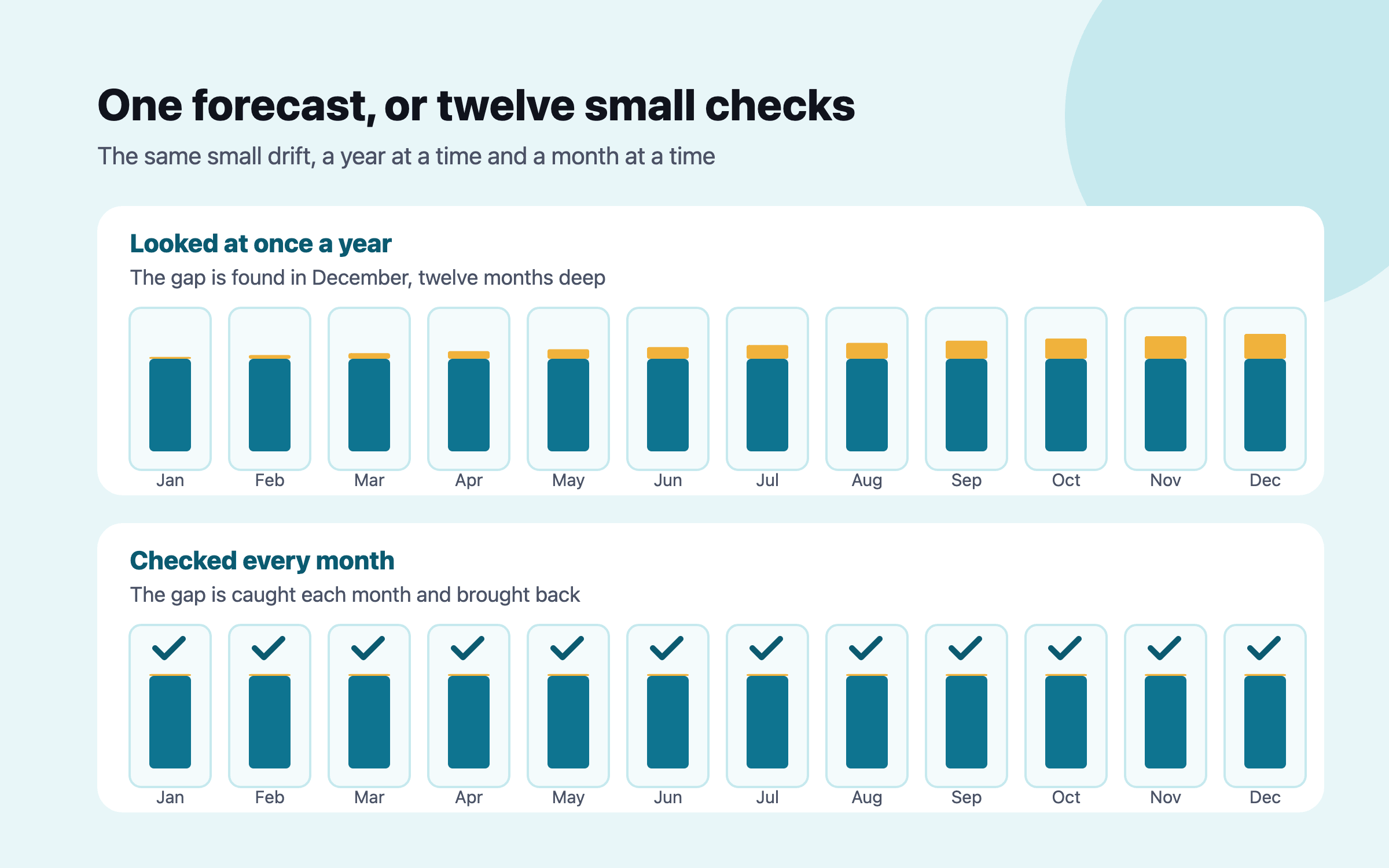
People underestimate what lies ahead even when asked for a worst case: students in a classic study took 55.5 days over theses they expected to finish in 33.9. A yearly budget is that kind of forecast. A short check at the end of each month catches drifts while they are small, sees the irregular month coming and keeps every month on the record.
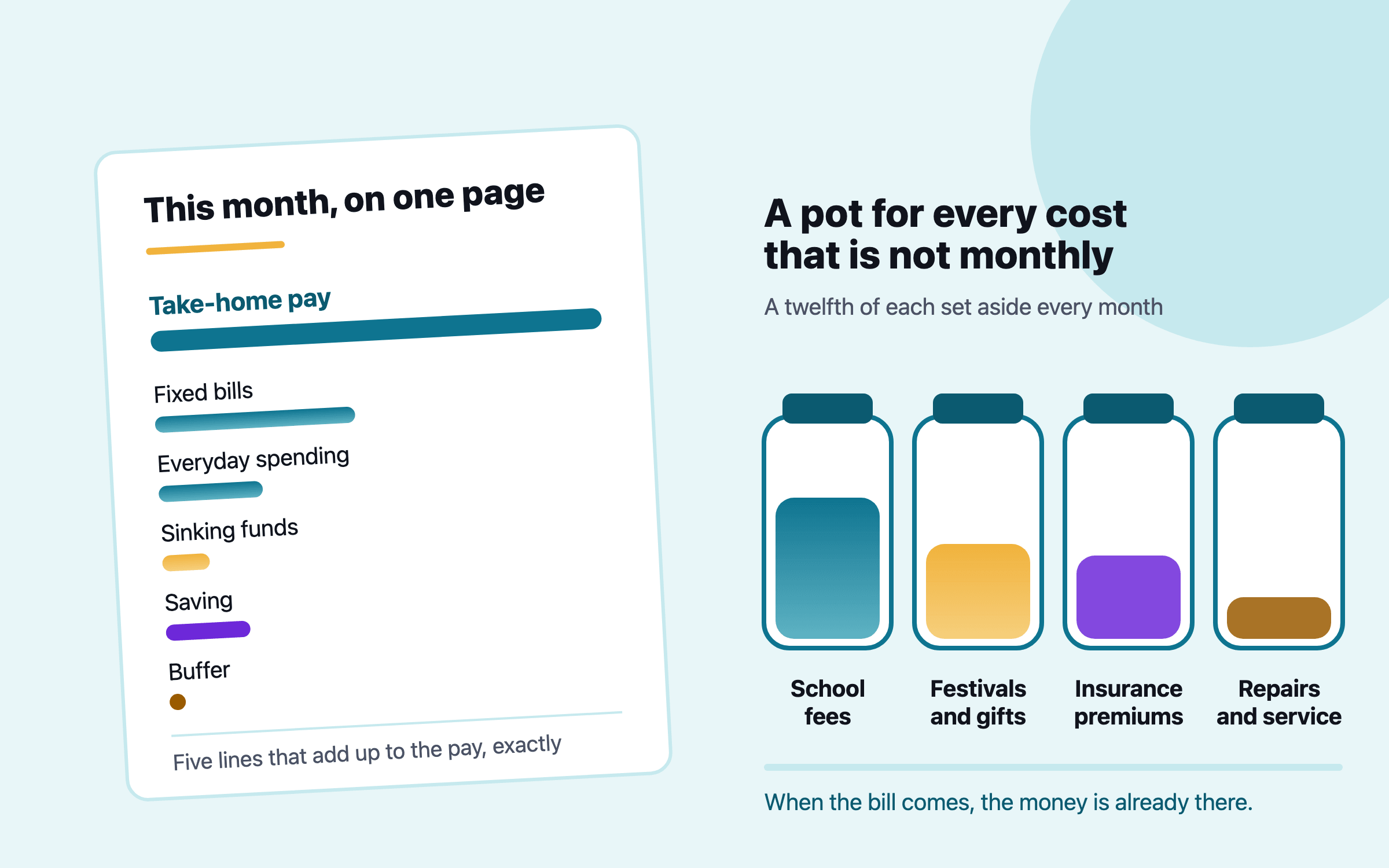
In the APA’s 2026 survey 77% of US adults called the cost of living a significant source of stress, and September prices rose 3.7% in the US and 5.54% in India. A Mumbai family shows the fix: one page for the month, a pot for every irregular cost, payday automation and twenty minutes a week.
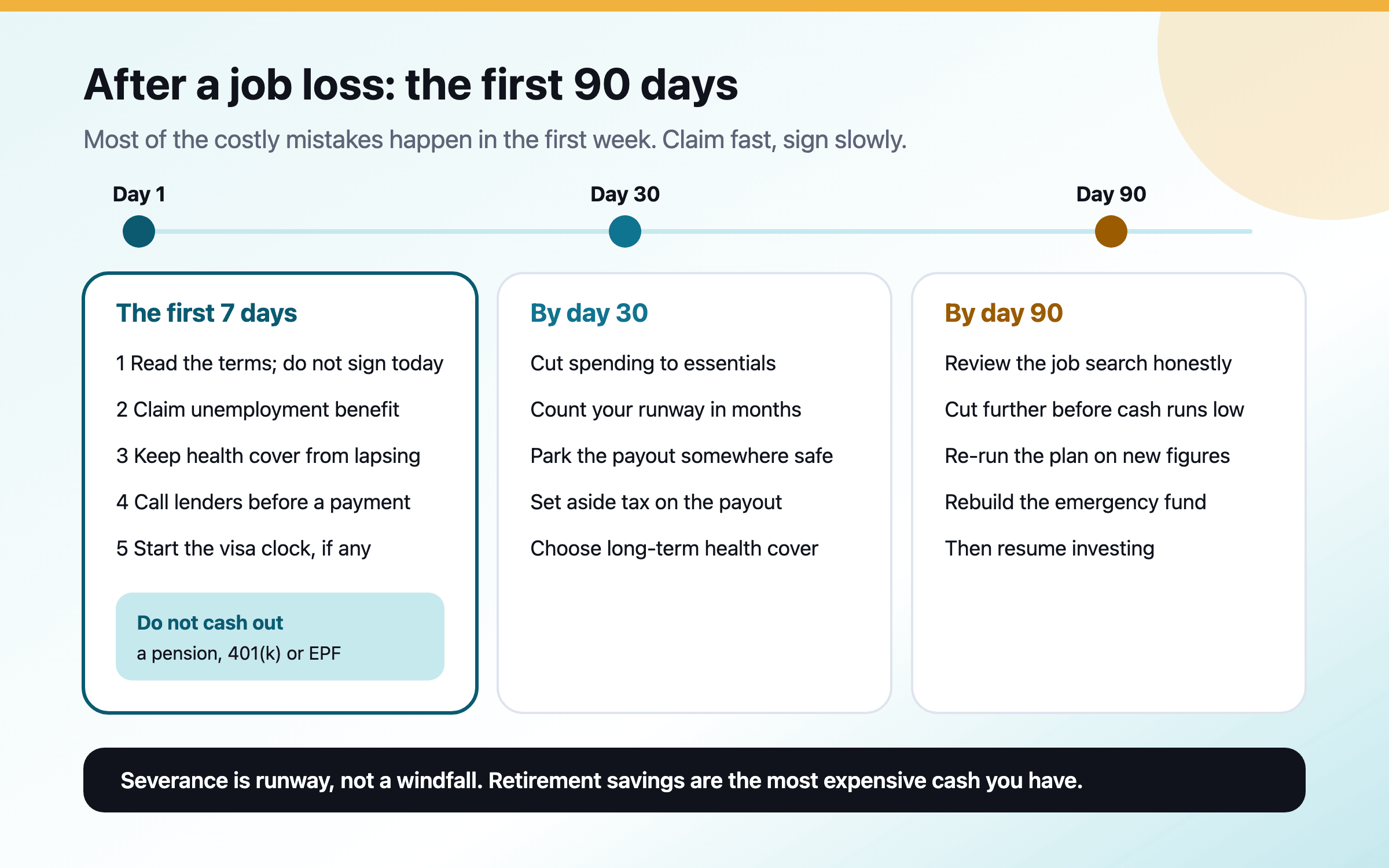
Most of the expensive mistakes after a layoff happen in the first fortnight: signing a severance agreement unread, claiming benefits late, letting health cover lapse, missing a loan payment without calling the lender, and cashing out retirement savings. This is the order to do things in, with the 2026 rules for the US, UK, India, Canada, Australia, Singapore and the UAE.
This is general information, not financial, tax or legal advice for your circumstances. Rules and figures change; check the official source for your country, and consult a licensed professional before making financial decisions. Projections are estimates, not predictions.